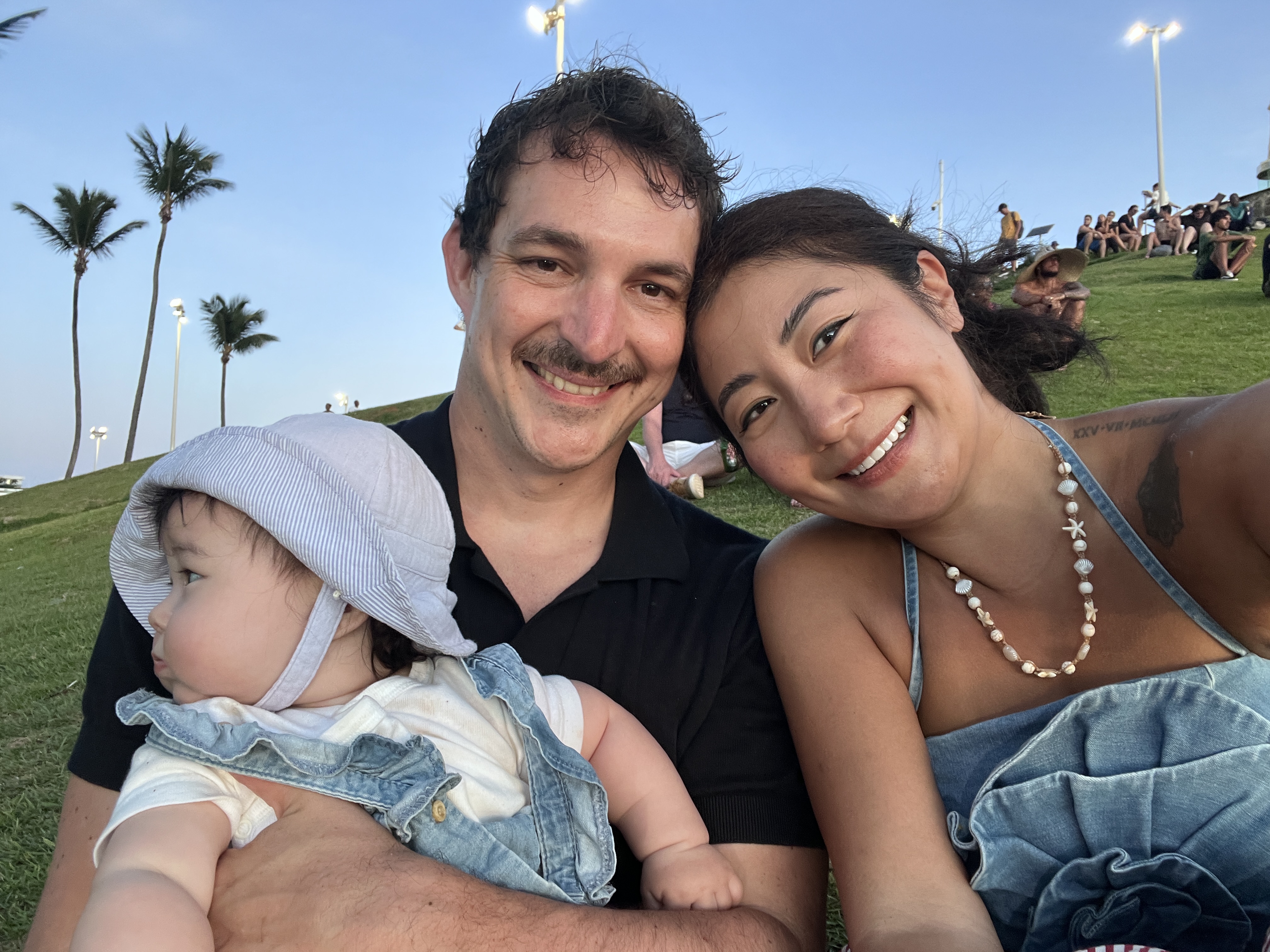
Salvador da Bahia doesn’t ease you in gently. From the moment you arrive, it hits you with colour, sound, and a sense of history so layered it takes a few days to fully absorb. We spent a week here with our six-month-old daughter Béa — and it turned out to be one of the most vivid, surprising, and unexpectedly manageable trips we’ve taken as new parents. Here’s everything we got up to.
The Pelourinho walking tour with Roberto
If you do one thing in Salvador, make it a private walking tour of the Pelourinho — and if you can find Roberto, book him immediately. We spent four hours with him wandering the historic centre, and it was worth every minute. A private tour with a baby turned out to be the right call not just for the flexibility — stopping whenever Béa needed attention without the pressure of a group — but because Roberto’s knowledge made the neighbourhood come alive in a way that walking around alone simply wouldn’t have.

Salvador was Brazil’s first capital city for over 200 years, built on the wealth of sugar cane — and built, more honestly, on the labour of enslaved Africans. Brazil received more enslaved people from Africa than anywhere else in the Americas, and Salvador bears that history more visibly than almost any other city in the world. What struck us most was learning that many of those brought here from West Africa were Muslim — a detail that reframes the story of Afro-Brazilian culture in ways we hadn’t anticipated. That history is everywhere in Salvador: in the food, in the music, in the religion, in the street art. Roberto connected all of it.
The Pelourinho itself is visually extraordinary — cobbled streets winding between colonial buildings painted in ochre, turquoise, and terracotta, street art covering entire facades, local artists selling work from open doorways. Nowhere felt staged. It felt like a neighbourhood that happened to also be one of the most historically significant places in the Americas.


The self-guided day
We went back to the Pelourinho on our own terms too — slower, with no agenda beyond wandering. It was a completely different experience, and just as good. We stumbled across a vinyl store and left with a small stack of records from Brazilian artists — one of those finds you can’t plan for. We ate bobó de camarão, moqueca, and acarajé at street-side restaurants Roberto had pointed us towards — nothing fancy, plastic chairs and paper napkins, exactly right. The acarajé deserves a special mention: a deep-fried black-eyed pea fritter filled with vatapá and dried shrimp, brought to Brazil from West African food traditions and still made and sold almost exclusively by Bahian women in white dresses. Eating it on a street corner in Salvador felt like the whole trip in a single bite.

We also bought açaí — proper Bahian açaí, nothing like the sweetened smoothie bowl version that’s travelled the world — and picked up souvenirs from local artists and shops. It was one of those days where you don’t do much on paper but feel like you’ve absorbed everything.
The catamaran trip to Ilha dos Frades
We booked this through the tour company at the hotel and went in with high hopes. The island itself delivered — calm, clear waters, lush and unhurried, genuinely beautiful. But we’ll be honest: as a day out with a baby, it was hard work. The boat played loud live music for most of the journey, the heat was relentless, and the whole thing had the feel of a well-worn tourist circuit. We made it work — Béa napped in the shade while we ate a whole fried fish at a waterside table, which was the undisputed highlight of the day — but we’d probably skip it next time in favour of another lazy beach day. Worth knowing before you book.

The beach days
Honestly? These were some of our favourite days of the trip. We kept it simple — the beach directly in front of the Monte Pascoal, which was the least crowded stretch and came with complimentary sun umbrellas, chairs, and towels. We went early, before the heat peaked, and again in the late afternoon. We kept Béa in the shade, offered feeds often to keep her hydrated, and let the days unfold slowly.

Béa took to it all with a confidence that surprised us. She swam in the ocean — properly, held in the water, kicking her legs. And then there were the sunsets. Barra is known for them, and rightly so — every evening a small crowd gathers near the lighthouse to watch the sky do something unreasonable in shades of pink and orange, and we were there for most of them. Béa watched them with us from the promenade, wide-eyed and unbothered, as if she understood completely why everyone had stopped walking. There’s something about watching a sunset with a baby who is seeing everything for the first time that makes you see it differently too.

We started introducing solids on this trip, and Salvador felt like the right place for it — she had mashed egg with avocado, tried coconut water straight from the coconut, and seemed to approach the whole thing with the same curiosity she brought to everything else. Watching your baby experience the world for the first time, in a place as alive as Salvador da Bahia, is something that’s hard to put into words.
The rhythm of it all
Travelling with a six-month-old in this kind of heat requires a loose structure and a willingness to let go of any fixed plan. We avoided peak sun hours, kept feeds frequent, made sure shade was always within reach. Béa set the pace and, more often than not, the pace she set was the right one — slower, more present, more attentive to what was actually around us. Salvador rewards that kind of travel. It’s not a city you rush.
Leave a Reply